
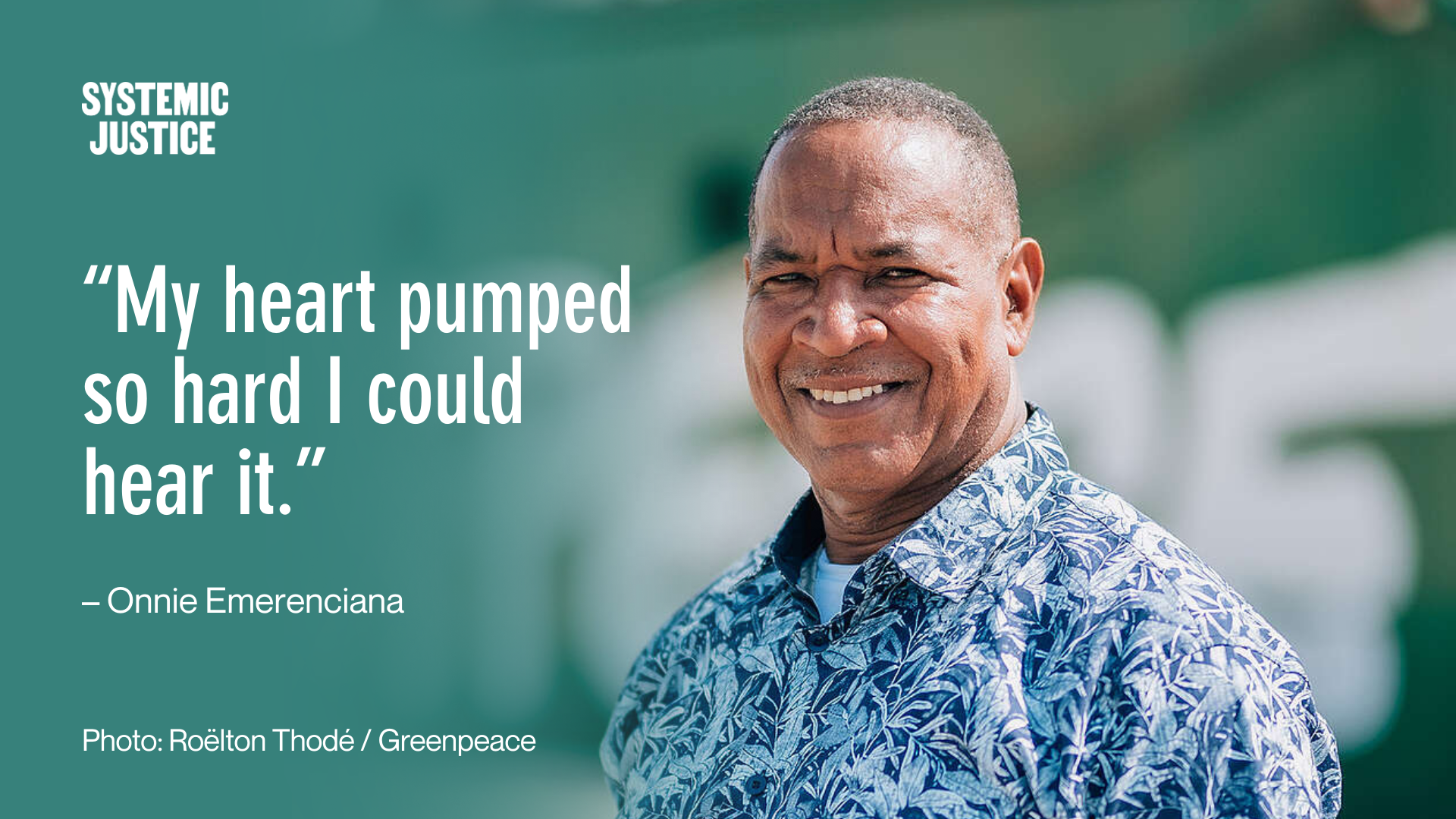
Onnie Emerenciana, a farmer from Bonaire, has watched extreme heat and rising sea levels destroy his crops for years. As the Dutch Government did little to protect the Caribbean island and Dutch special municipality, Onnie and seven other Bonaire residents, supported by Greenpeace Netherlands, took the government to court – and won.
In January 2026, in a first-of-its-kind judgment, the Hague District Court ruled that the Netherlands discriminated against its people by treating Bonaire residents differently from residents of the European part of the country and by failing to develop a climate adaptation plan. In our conversation, Onnie shared what this victory felt like – and what it means for other communities facing climate injustice.
Onnie, the court ruled in your favour. How did you feel hearing that?
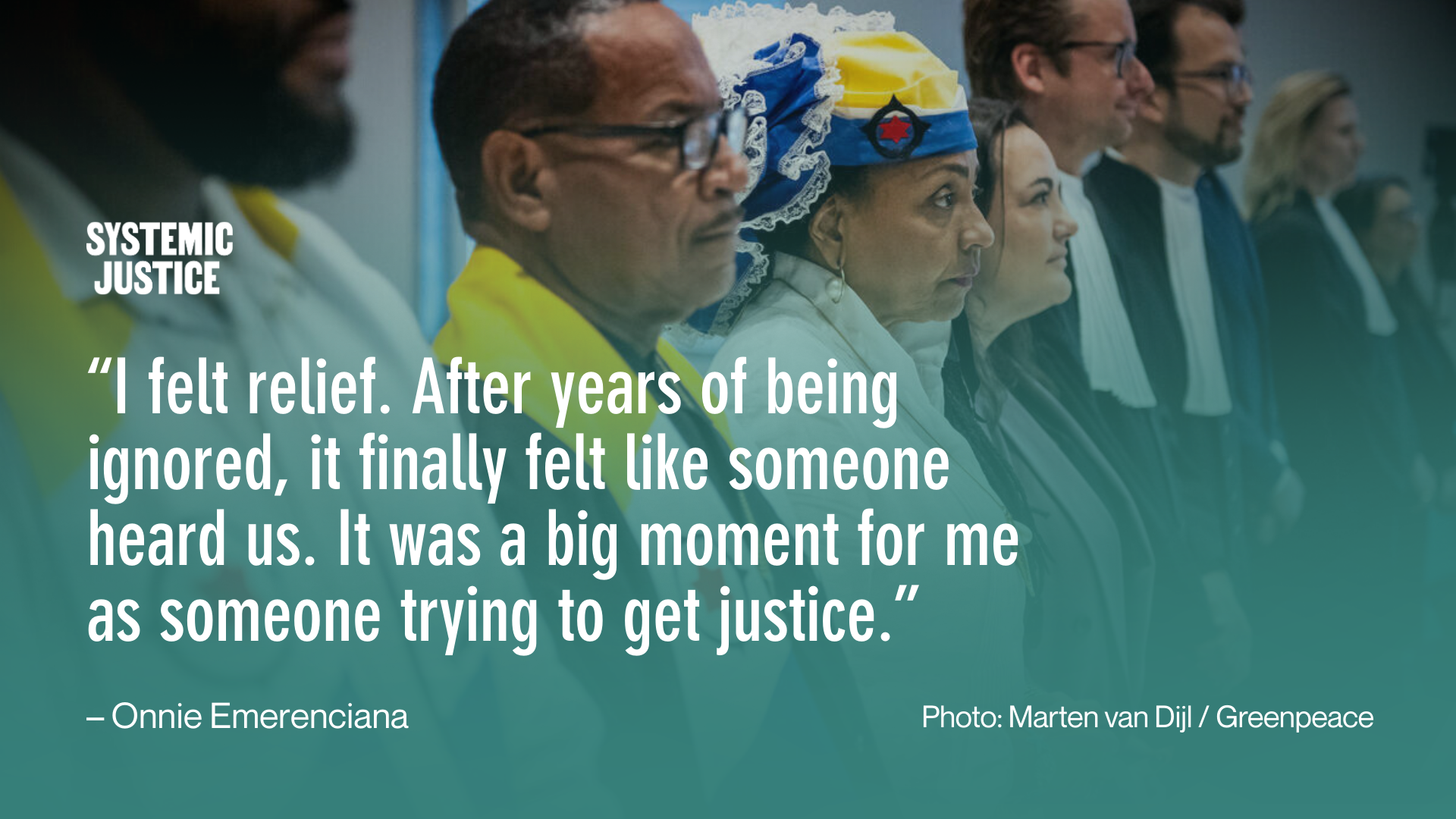
I felt relief. After years of being ignored, it finally felt like someone heard us: I was happy and excited, and my heart pumped so hard I could hear it. It was a big moment for me as someone trying to get justice.
This is the first time a court has ruled that a government discriminated against its people by failing to protect them from climate change. What does that mean to you personally?
It means our lives matter. We are not second‑class citizens. For me, it’s deeply personal. I’m a farmer, and I work with the land every day. I see how vulnerable we are. To hear a judge say that failing to protect us is discrimination… that touched me.
Discrimination is a powerful word to use in a court. It means we belong. It means we deserve the same protection as every other Dutch citizen. Kralendijk is far, but it deserves the same treatment as De Waddeneilanden or Valkenburg.
How have you personally experienced the impacts of climate injustice that made you want to fight against it?
I see it in my soil: there’s more heat, more drought, and rain on the island that destroys instead of nourishes. Streets and houses are under water traffic jams, schools are closed, and a fifth of the island is disappearing under water.
On my 3.6-hectare farm, climate change is not a theory – it’s my daily reality. The droughts are longer, the sun is harsher, and when it rains, it comes in violent bursts that wash the soil away.
I have to build my own greenhouses just to keep producing food. That’s climate injustice: we contribute almost nothing to the problem, but we feel the impacts the hardest.
Did you initially believe that taking the government to court would work?
We needed action, and talking about it wasn’t enough. Climate change is not the priority of the island’s government. Twice, I went to the parliament to inform them about my problems with climate change, but nothing happened. For years, we asked for protection, but nothing changed.
Meanwhile, our island was getting hotter, drier, and more dangerous. I believed the court would see the urgency that politicians didn’t. Sometimes you need the law to defend your right to safety. And that’s what we did – we stood up for our rights.
What do you hope this victory means for other islands and communities facing climate injustice?
I hope this ruling sends a message to every small island and vulnerable community: you are not alone, and you are not powerless.
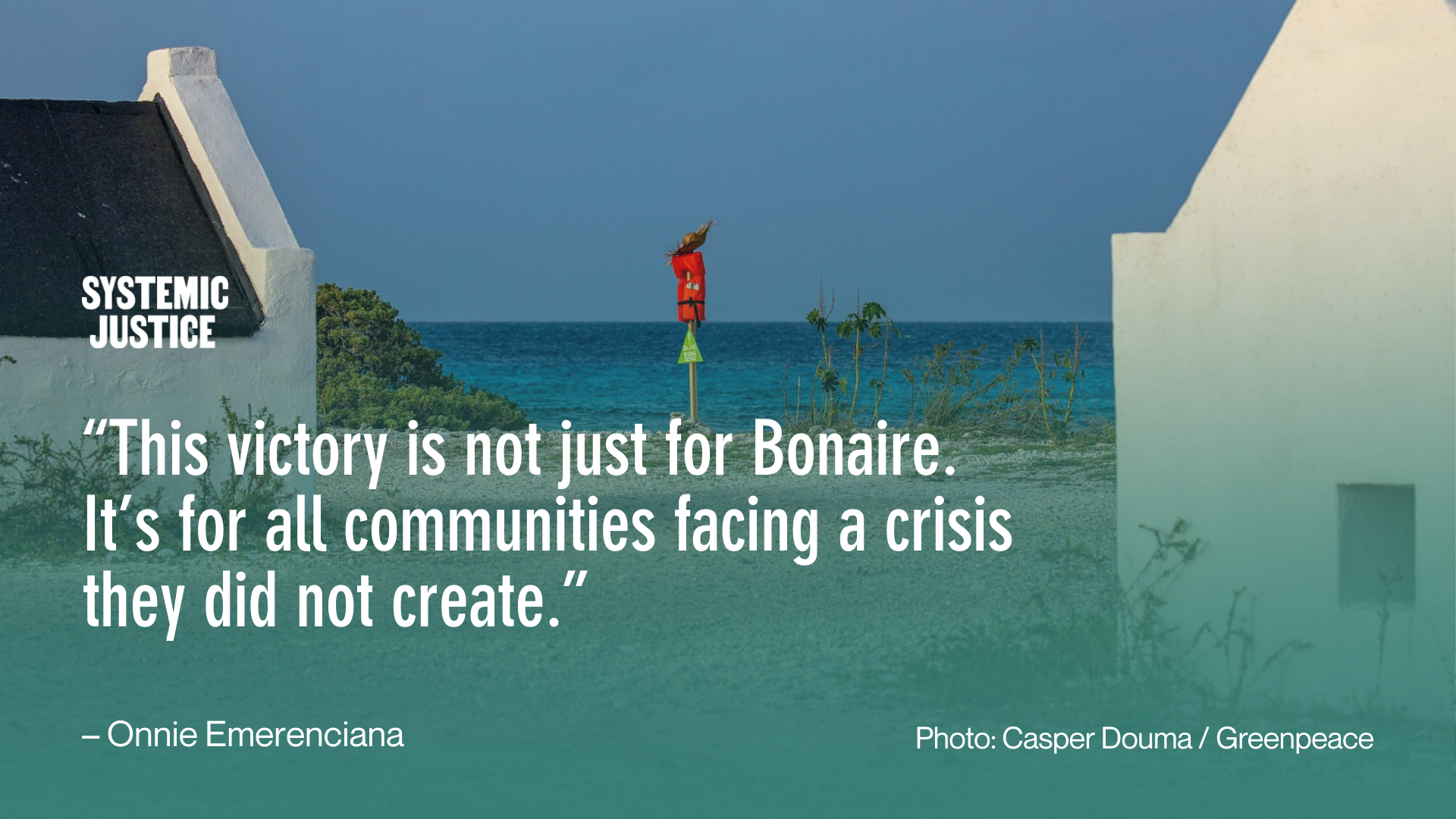
We showed that even a small island can stand up and say, “We deserve protection.” This victory is not just for Bonaire. It’s for all communities facing a crisis they did not create.
No one should have to fight this battle alone. This is climate injustice: we are not the ones who create the problem, but are the ones who are feeling the consequences every day. It affects our lives, our culture, and the island the hardest.
Previously, we spoke to Onnie on Whose planet? The climate justice podcast, a series centring the experiences of those most impacted by the climate crisis. You can listen to it wherever you get your podcasts.