

Social Protection
Marginalised communities are systematically excluded from social protection
Social Protection
Across Europe, governments are excluding migrants and asylum seekers, LGBTQI+ people, Roma communities, sex workers, religious minorities, and others from essential services, including housing, healthcare, and access to labour markets. This growing pattern of exclusion is driven by ideas of who is and isn’t of state support.
Communities consistently describe how these policies erode dignity and intensify precarity. As the provision of services shrinks, amid discrimination, criminalisation, and social exclusion, the responsibility for meeting basic needs shifts.
Governments often deny accountability by isolating individual cases rather than recognising structural patterns. To challenge this, we are developing community-led litigation projects that push for systemic change.

Photo: Systemic Justice team member at Community Visions for Liberation event, Berlin / Mohamed Badarne
During our 2022 Europe-wide community-consultation process, activists and community organisers highlighted the widespread impact of exclusionary welfare policies. Survivors of gender-based violence, Roma communities, LGBTQI+ communities, Muslim communities, and migrants reported disproportionate exposure to homelessness, poverty, and institutional discrimination. They also identified key opportunities for action, including securing equal access to healthcare and welfare and challenging exclusionary and ableist support systems.
Our 2023–2024 community consultations reaffirmed that exclusion from social protection remains one of the most urgent issues facing marginalised communities across Europe, underscoring the need for collective, community-driven legal strategies.
Social protection is therefore a central area in which we are building joint litigation projects, shaped through ongoing collaboration with communities, organisers, and activists across Europe.
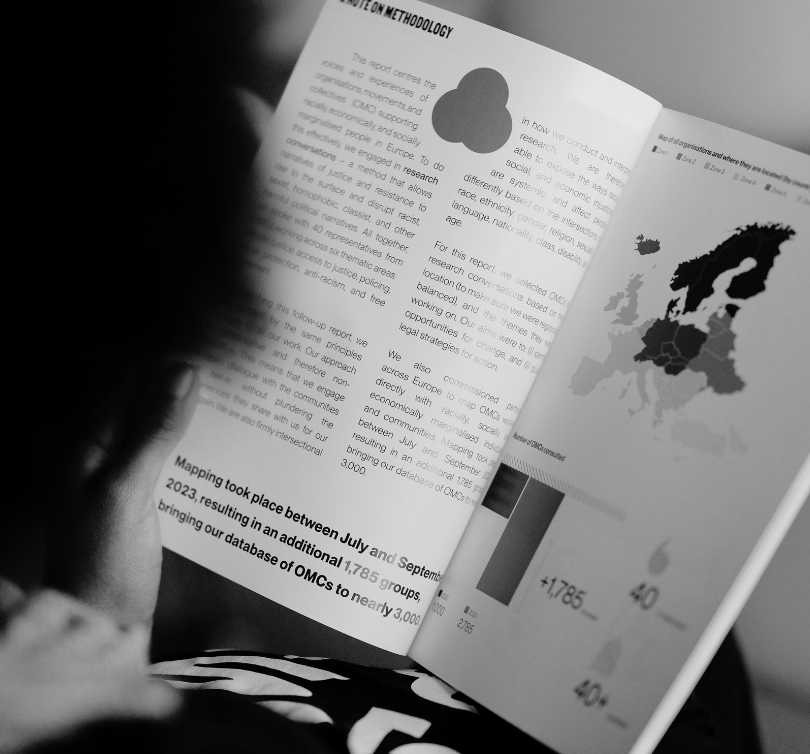
Photo: Revisiting Systemic (In)justices: Community reflections report / Mohamed Badarne