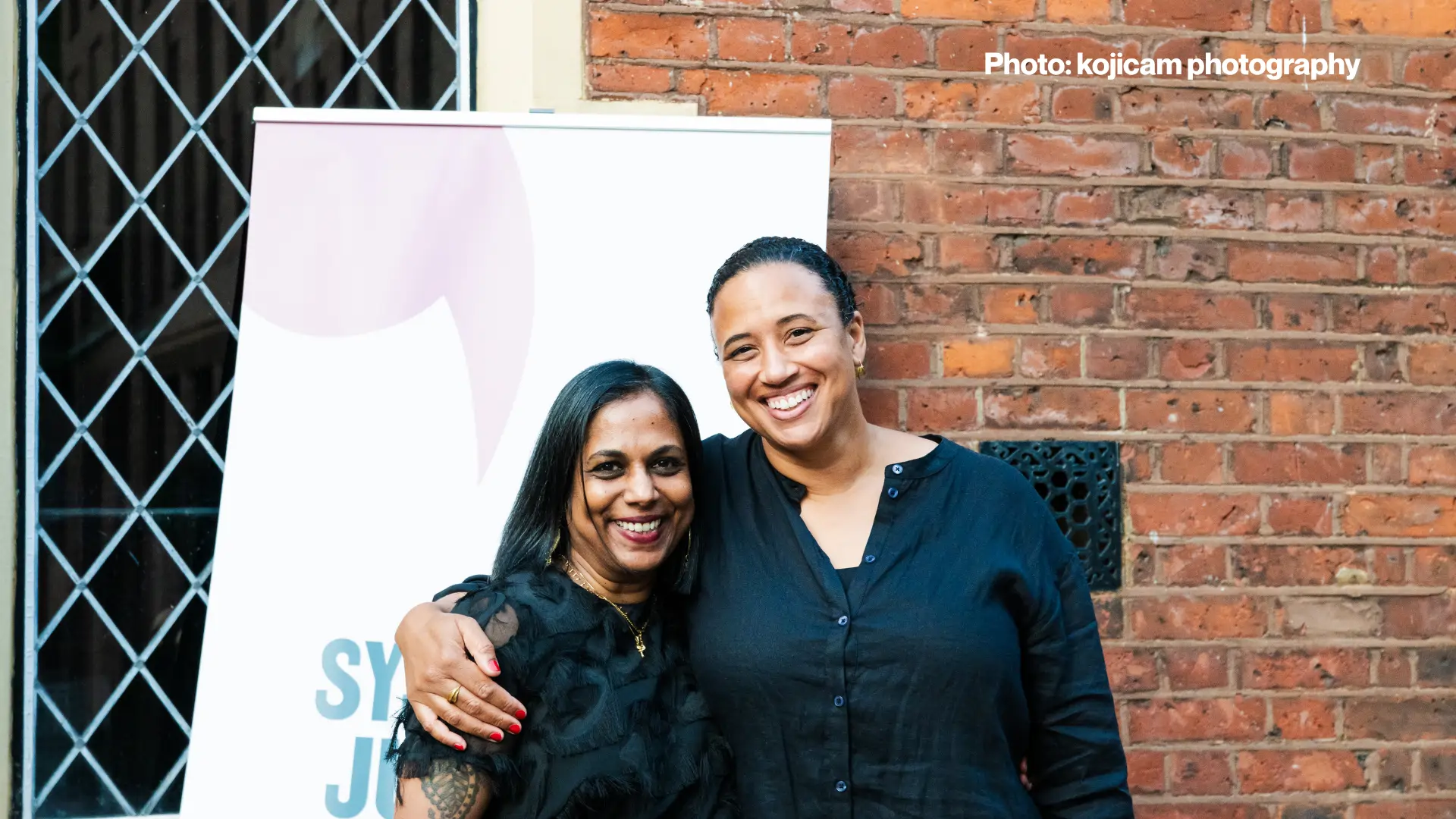
On 29 June, at Systemic Justice’s fifth-anniversary celebration, Executive Director Saranel Benjamin reflected on stepping into leadership, the importance of a carefully designed leadership transition, and the responsibility of building on the foundations laid over the organisation’s first five years. We are sharing a written version of her remarks below.
On 30 June, Nani Jansen Reventlow steps down from Systemic Justice, bringing to a close the nine-month leadership transition she and I have been on since I was appointed as Executive Director in September 2025. It has truly been one of my career highlights to have had the privilege of experiencing a leadership transition like this.
When Nani first pitched the idea of a nine-month transition, there was a lot of scepticism that it was too long, that it would be too frustrating for me, and that it was a signal of Founder’s syndrome. But when Nani said she had designed the process for success, she meant just that. The success she had in mind was both my ability to succeed as the incoming Executive Director and the organisation’s success in continuing its important work. Both of these outcomes are intricately connected.
Nani has written about building a different kind of organisation – one that lives its values of anti-oppression, intersectionality, and justice – and is built on the concepts of guardianship and the “good ancestor”.
In her book, Radical Justice, Nani writes about what it means to be a good ancestor and explains it with the quote, “Few farmers sit in the shade of the tree they plant.” Our leadership transition sits within the tradition of guardianship and being a good ancestor: its nine-month duration was absolutely necessary.
I have been given the luxury of time (with generous support) that most incoming executive leaders don’t get. In the nine months I got to learn everything there is to know about Systemic Justice: from its origins, to the values-driven how and why of its methodology and approach, its systems, policies and processes, and governance structures – and how these all work in harmony to bring about radical change in the world. This was all by design because learning everything during a very structured nine-month transition means I can now build on what has come before me through the foundations Nani has laid.
Alongside that learning, I also had time to focus on getting to know the brilliant Systemic Justice team and understanding the organisation’s culture. This is so vitally important to hold the team steady, create a stable environment so that the transition is as easy as possible for everyone, and move as a collective towards our shared goal.
Nani also made sure that funders, peers, and partner relationships were also passed on to me. We have been on the road for nine months, making introductions to funders, peers, partners, and connectors. It has been both exhilarating and exhausting, but so worth it. Relationships and partnership building are cornerstones of Systemic Justice and contributing factors to its success, so these introductions were never going to be just over email.
During the leadership transition, I have had the honour of forming a successful and beautiful partnership with Nani, who gave so generously of herself. I can say that we have built a partnership based on trust, honesty, and kindness, with the shared goal of ensuring the success of Systemic Justice.
At the team retreat in October 2025, a space was created for Nani to share the story of Systemic Justice’s origins with the team. With such care and love, Nani meticulously mapped out Systemic Justice’s origins, each milestone marked with a photograph she or the team had taken over the five-year period. The attention to detail was as astonishing as the way each and every step in building the organisation was driven first by the founding values of anti-oppression, intersectionality, and justice, both in its internal ways of working and in its external practice. From the moment it was decided that an organisation like Systemic Justice was needed, Nani and her small team built an organisation to deliver a truly community-driven approach to strategic litigation.
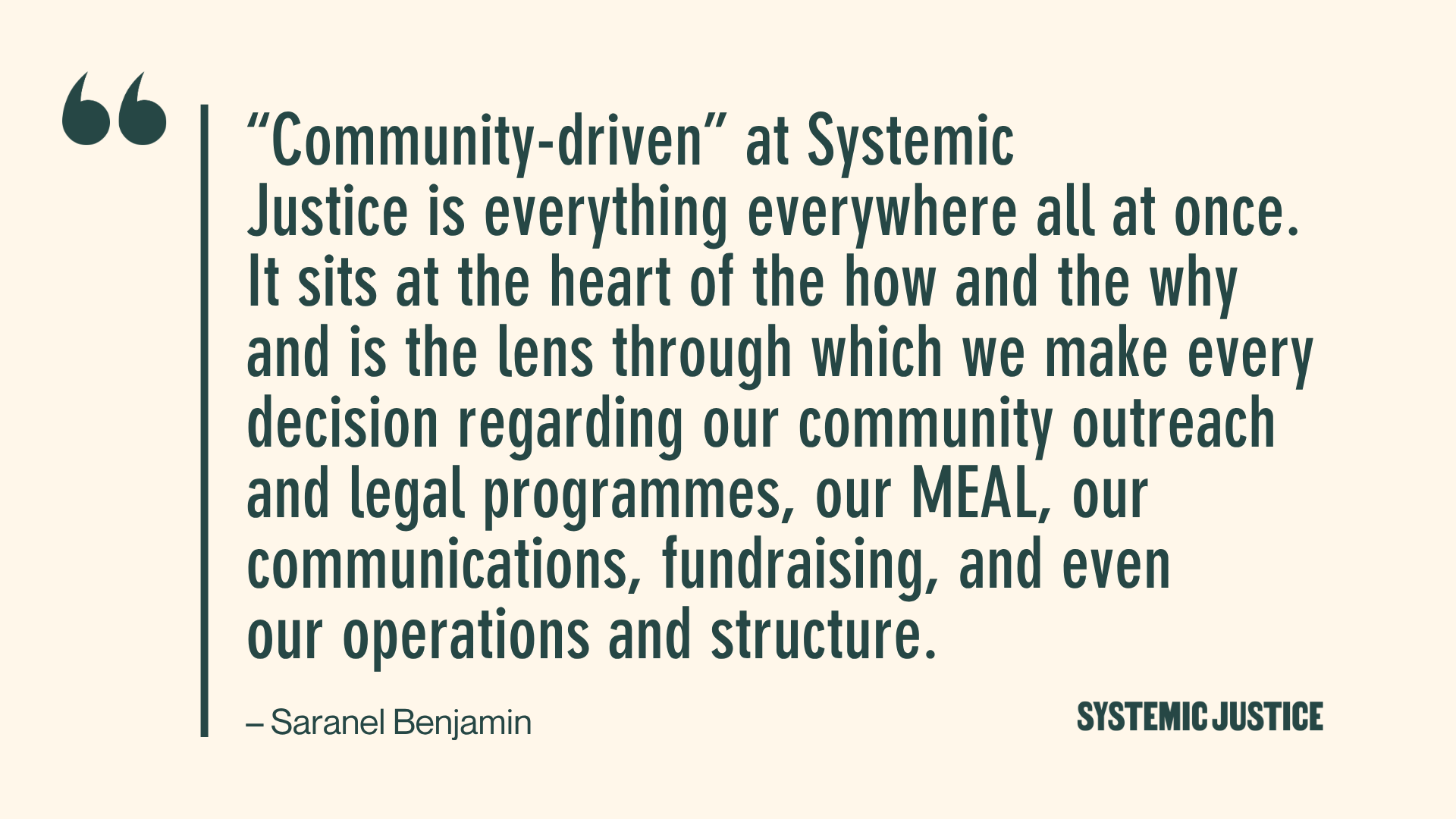
“Community-driven” at Systemic Justice is everything everywhere all at once. It sits at the heart of the how and the why and is the lens through which we make every decision regarding our community outreach and legal programmes, our MEAL, our communications, fundraising, and even our operations and structure.
The Sowing the Seeds exhibition at our five-year anniversary highlighted how Systemic Justice was built, what it has achieved over the past five years, and the acknowledgement that none of this could be possible without the community partners we work alongside.
When Nani told the story at the team retreat, it became clear very quickly that Systemic Justice has made a significant impact on the justice field, in a short space of time, and that a very special and very different kind of organisation was being built.
This is a small but mighty organisation punching above its weight, doing real, transformative work with an incredible, passionate team.
So much of the groundwork laid in the last five years – from building the knowledge and power of communities affected by systemic injustices on how to use the law for change, to working at the pace of trust with community partners to build litigation strategies, and supporting community partners on their litigation journeys, to working with legal organisations to transform the norms and practices of the legal field – is contributing to bringing about sustainable systemic change with communities leading that charge.
The way we work externally is mirrored internally. This is visible in our policies, practices and systems, in how we work together and gather together as a team, in how our Supervisory Board, Management Board and Senior Leadership Team try to perform their governance function in alignment with our values – trying to flatten the hierarchy through meaningful practices of collective decision making and sharing power.
2026 also marks the end of our first strategic plan. To close out the plan and develop the next one, we conducted a strategic reflection process, gathering insights from community partners and others in our ecosystem on the strengths of our work and lessons we could learn from our practice.
A key finding was that our Theory of Change remains relevant today, perhaps more so given the current pushback and rollback of democratic values, civic, and civil rights. With these findings, Systemic Justice will be launching its next strategic plan in early October.
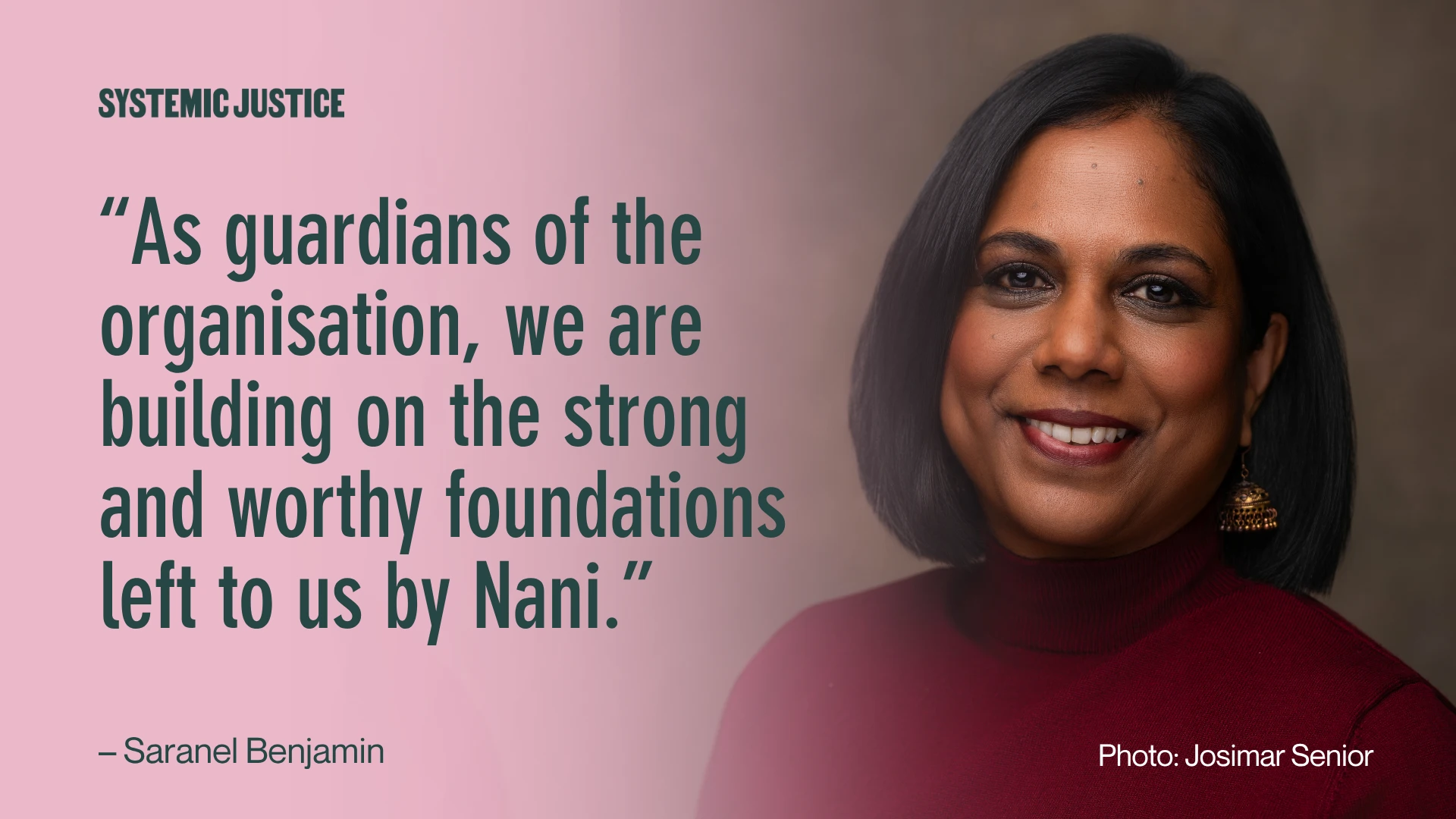
We have deliberately called it “next” and not “new’ because, as guardians of the organisation, we are building on the strong and worthy foundations left to us by Nani. And we will use the strong foundation to leap as boldly as she did back in 2021.
This is not a goodbye to Nani. This is a heartfelt thank you for gifting the world a truly unique and special organisation doing groundbreaking and radical work.
I am certain that in the not-too-distant future, Nani and I will be sitting in her lovely garden in her home in the Danish countryside, sipping dirty martinis and shooting the breeze. In the meantime, I look forward to leading this brilliant organisation towards its ten-year anniversary.